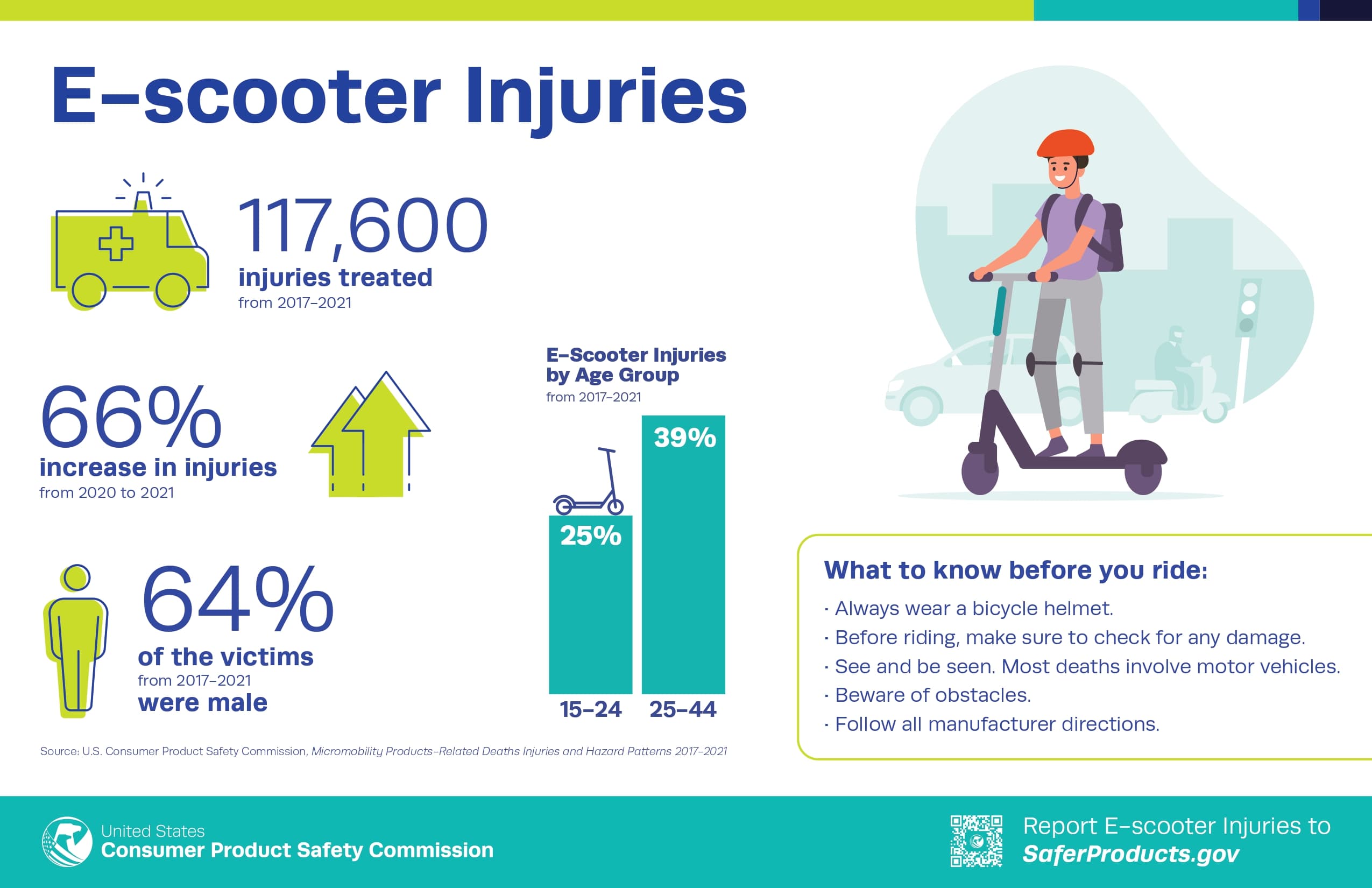

E-scooters, e-bikes, and hoverboards are used to commute to and from work or school, or just for fun. CPSC’s latest report finds that emergency room-treated injuries and deaths associated with these products are increasing.
CPSC reminds consumers to use micromobility devices and batteries that have been designed, manufactured, and certified for compliance with the applicable voluntary safety standards and always exercise caution when using these devices. Common sense choices before, during, and after each ride can significantly reduce the risk of injury and fire.
Before You Ride
Watch CPSC’s PSA on safe riding:
- Follow local traffic laws. Requirements for helmets, riding locations, and roadway use are different in every community and are designed to reduce the risk of crashes and injuries. Obey posted speed limits, traffic signals, and rules of the road. Use bike lanes or designated riding areas where required.
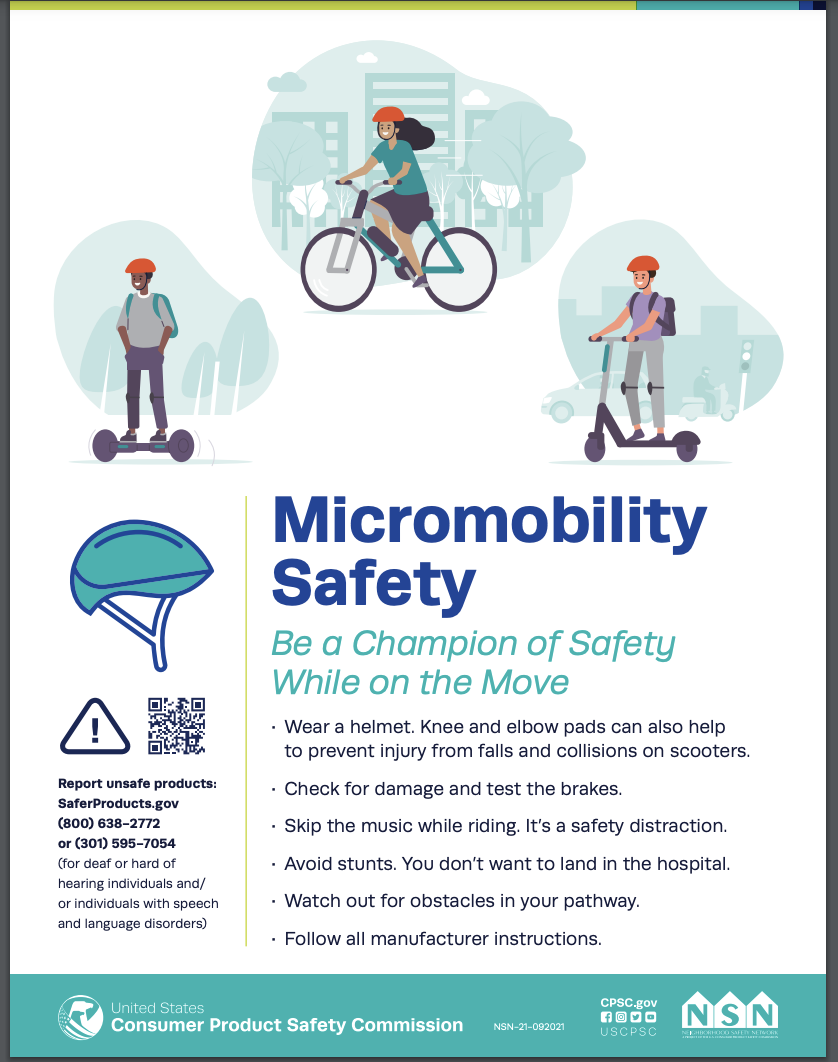
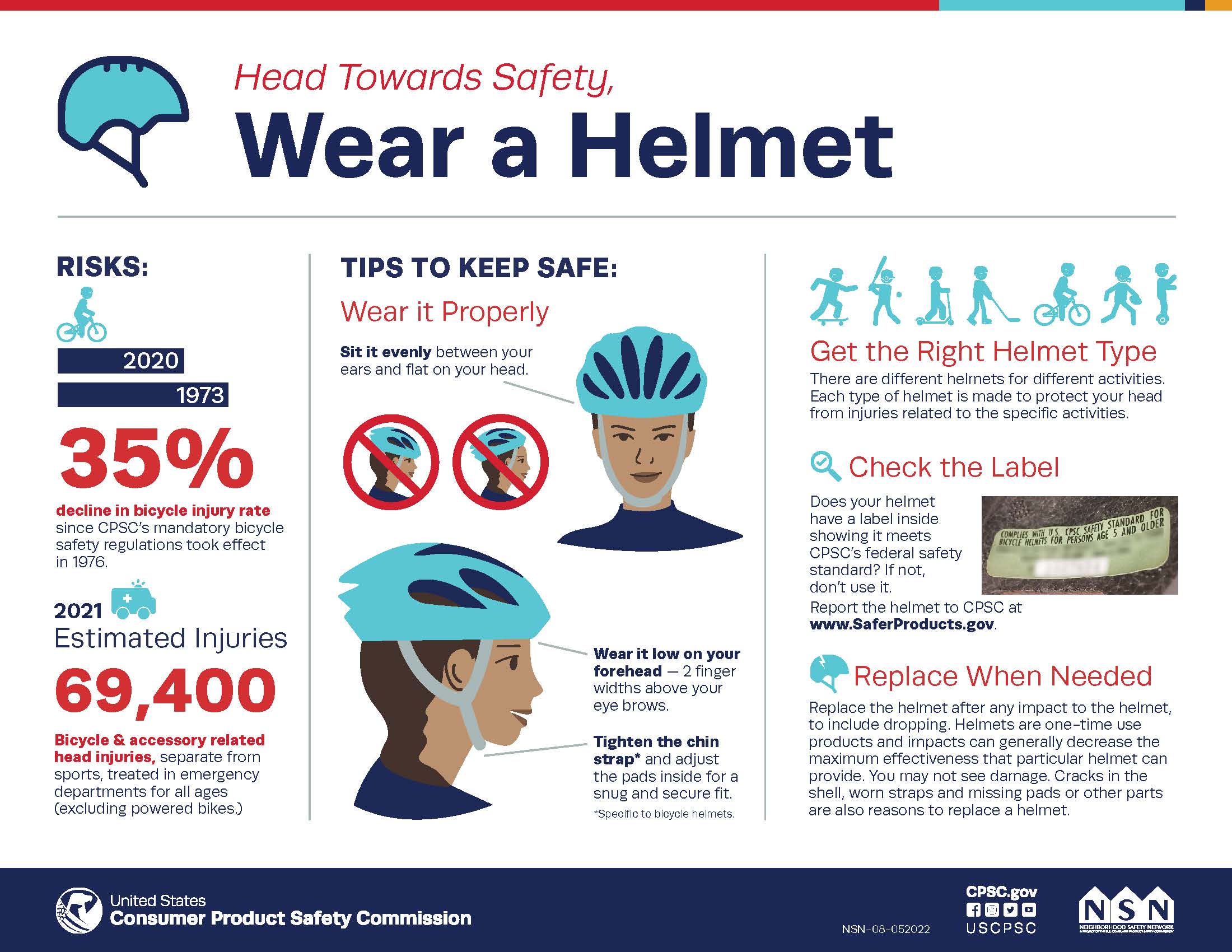
- Always wear a bicycle helmet when riding to protect your head.
- Check for any damage, including the handlebars, brakes, throttle, bell, lights, tires, cables, and frame.
- Follow all manufacturer directions, review the safety information and identify weight and age limits for the micromobility device.
During Your Ride
- See and be seen. Most deaths involve motor vehicles. Many micromobility devices are small, quick, and quiet, making it difficult for others to spot you, especially in parking lots, garages and other enclosed structures.
- Expect vehicle drivers and pedestrians not to see you. Slow down and stay aware of your surroundings.
- Use reflectors, headlamps, a bell or horn, and other visibility accessories to alert others.
- Do not make abrupt, unpredictable movements.
- Beware of obstacles. E-scooters have small tires, so objects and uneven surfaces can cause them to stop suddenly, throwing you off.
- Always keep both hands on the handlebars and keep items off the handlebars.
- Slow down and lean back when approaching bumps.
- Never ride under the influence of alcohol or drugs.
- Only one person per scooter; additional riders can increase the risk and severity of collisions.
After the Ride
- Follow the manufacturer’s instructions for proper charging and unplug the device when done.
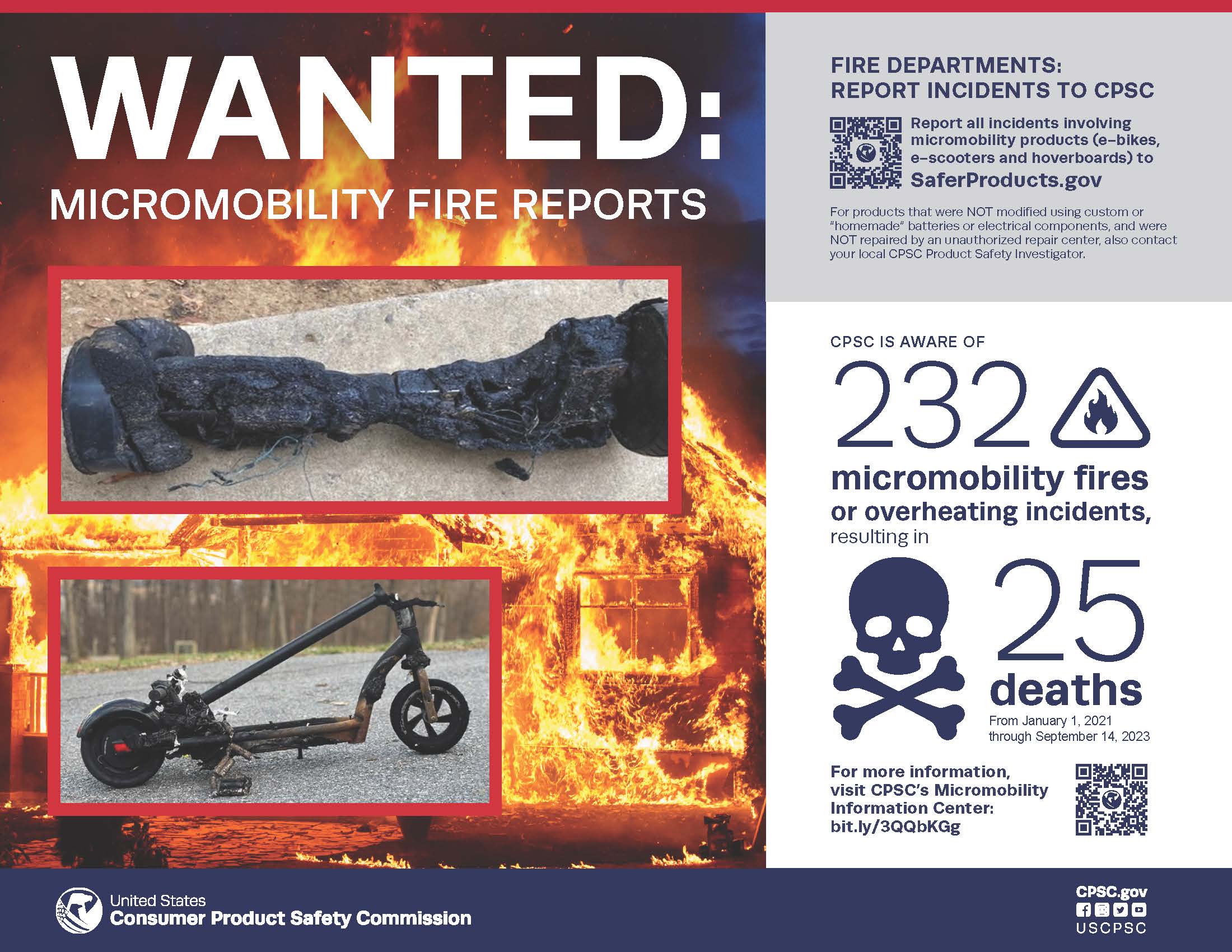
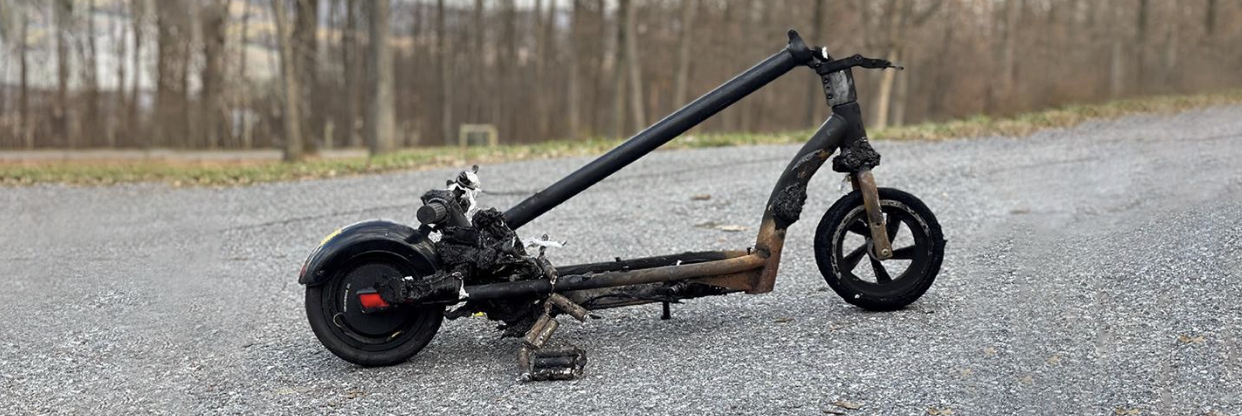
- Always be present when charging micromobility products. Never charge them while sleeping or when you are not at home. CPSC has seen many lithium-ion battery home fires and deaths happen at night while batteries were charging and families were asleep.
- Only use the charger provided with or recommended by the manufacturer of your micromobility device. Learn more safe charging tips.
- Only use a replacement or secondary battery pack that has been tested and approved to work safely with your device and has been confirmed to be suitable for your device by the device manufacturer.
- Never use a micromobility device with a battery pack that has been modified or reworked by unqualified personnel or with repurposed or used cells.
- Never throw lithium batteries into the trash or general recycling. Instead, take them to your local battery recycler or hazardous waste collection center. If your lithium battery or device is subject to a recall or product safety warning, follow the disposal instructions in the CPSC press release.
If you have an issue with an e-bike or other micromobility product battery, report it to CPSC on SaferProducts.gov.
E-Scooter Recalls
Apollo Recalls Phantom Electric Scooters Due to Fall and Injury Hazards
Jetson Electric Bikes Recalls Nova and Star 3-Wheel Kick Children’s Scooters Due to Fall Hazard
Pacific Cycle Recalls Schwinn Electric Scooters Due to Fall and Injury Hazards
E-Bike Recalls
Pacific Cycle Recalls Schwinn Electric Scooters Due to Fall and Injury Hazards
Cannondale Recalls Tesoro Neo X Speed Electric Bicycles Due to Fall and Injury Hazards
E-Bikes Recalled Due to Fire and Burn Hazards; Distributed by Gyroor (Recall Alert)
Hoverboard Recalls:
DGL Group Recalls Hover-1 Superfly Hoverboards Due to Fall and Injury Hazards