




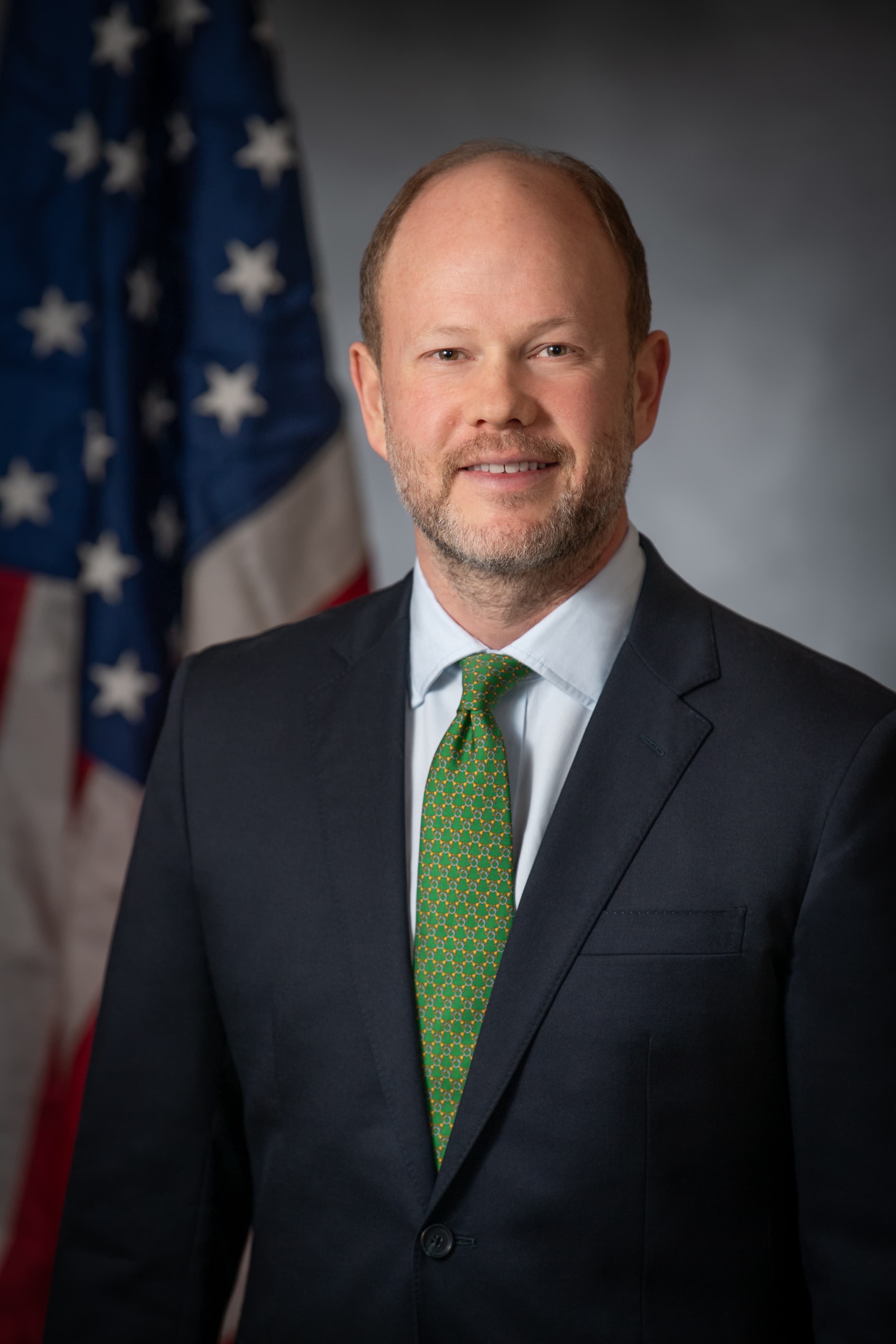
Remarks of Acting Chairman Peter A. Feldman at the National Roundtable on Reversing Childhood Drowning
Opening Remarks
National Roundtable on Reversing Childhood Drowning
June 30, 2026
Good morning, everyone.
Thank you all for being here and for accepting my invitation to participate in what I hope will mark the beginning of a new chapter in our nation's approach to preventing childhood drowning.
I appreciate the time, expertise, and experience each of you brings to this discussion. Around this table are advocates, standards developers, industry representatives, and public officials.
You bring unique perspectives and different experiences, but we are united by a common purpose: preventing tragedies and saving children's lives.
Drowning remains the leading cause of death for children ages one through four in the United States.
Every year, hundreds of young children lose their lives in incidents involving pools and spas.
Thousands more survive submersion incidents, often with life-altering injuries.
Behind every statistic is a child who should have come home, families whose lives have been forever changed, and parents forced to endure unimaginable loss.
For an agency charged with protecting the public from unreasonable risks associated with consumer products, there are few responsibilities more important than reducing those tragedies.
Yet despite decades of work, national drowning statistics remain stubbornly unchanged.
This month, the Commission released its latest annual drowning report. The numbers vary from year to year, but the larger story does not. We are not making the progress that America's children deserve.
That reality demands something different than what we have always done.
It demands that we ask difficult questions.
It demands that we challenge our assumptions.
And it demands that we set more ambitious goals.
Today, I convened this roundtable to issue that challenge.
Let's reverse the national trend in childhood drowning.
Not slow it.
Not manage it.
Not raise awareness about it.
Reverse it.
That is an ambitious objective.
And it should be.
Because if these trends continue twenty years from now, we will have failed the families we are here to serve.
Over the past year, the Commission has made drowning prevention one of its highest priorities.
We secured the largest product recall in Commission history involving approximately five million above-ground pools after multiple child drowning deaths.
Since January of 2025, we’ve issued recalls and safety warnings on more than 5,000 drain covers that do not comply with VGB requirements.
We granted a petition concerning child-resistant pool ladders and convened a taskforce to address safety standards for this product category.
We finalized tough new regulations to remove deadly neckfloats from the marketplace.
We are prioritizing federal grants to support drowning prevention efforts.
We have intensified our focus on unsafe product designs, dangerous access points, and other hazards that permit unsupervised children to gain access to water.
Mr. Dziak deserves credit for his role in advancing many of these matters.
Together, these actions reflect an important shift.
For too long, drowning prevention has been viewed primarily as a seasonal communications effort. While public education remains a critical component of our anti-drowning strategy, and the Pool Safely campaign has reached millions of families over nearly two decades, awareness alone cannot be the endpoint.
The question is whether our collective efforts are producing the results that America's families deserve.
Government has an obligation to evaluate its programs honestly.
We should not assume that a strategy developed twenty years ago remains the best strategy today.
That is precisely why I asked you here to share your expertise.
I did not convene this roundtable to validate the status quo.
I convened it to challenge it.
I want us to identify where the evidence is strong, and where it is weak.
I want us to be honest about what has worked, what has not, and where the Commission can make the greatest contribution going forward.
Nothing should be off the table.
If there are longstanding programs that should be strengthened, tell us.
If there are approaches that have outlived their usefulness, tell us as well.
If there are barriers preventing progress, we want to know.
One principle will guide this initiative from beginning to end:
We will measure outcomes—not activities.
The success of a drowning prevention strategy is not measured by the number of advertisements placed, or social media impressions generated.
Those things matter only if they contribute to what ultimately matters: Fewer children drowning.
That is the standard against which I intend to evaluate this initiative.
…
I'd like to leave you with one question.
If we were designing the nation's childhood drowning prevention strategy from scratch today—knowing everything we now know—what would we do differently?
Because that is a key question before us.
I’d now like to introduce our panel.
Joining us in person includes:
- The Honorable Doug Dziak, former Commissioner at CPSC
- Alan Korn, Executive Director, Abbey’s Hope
- Carol Pollack-Nelson, Owner of Independent Safety Consulting and a specialist in pool safety issues
- Justin Wiley, Vice President of Government Relations for Standards and Codes, The Pool and Hot Tub Alliance
- Lindsay Mondick, Director of Aquatic Strategy and Quality Practices at the YMCA
- Serina Bellamy, Partnerships Manager at AirBnb
- Megan Ferraro, Executive Director of ZAC Foundation
And joining us online are:
- Katey Taylor, President of Abbey’s Hope
- Aaron Levy, Vice President of Government Relations at the International Code Council
I would also note that while we’ve kept this group to a manageable size to facilitate a richer roundtable discussion, we have received, and I hope will to continue to receive, written comments that are just as valuable to this effort.
Before we turn it to our guest speakers for their introductory remarks, I would like to welcome a special guest here today.
Congresswoman Debbie Wasserman Schultz of Florida, needs no introduction because her leadership and dedication to this cause is without question or parallel.
On a personal note, I want to let you know how much I enjoyed visiting you in Florida several weeks ago and thank you for what I thought was a productive conversation.
Representative, you are recognized for 5 minutes to make some opening remarks.